The Gulf Cooperation Council has formally rejected Iran’s invocation of Article 51 self-defense to justify its ongoing missile and drone strikes against Gulf nations, delivering a sharp rebuke to Tehran at the United Nations as attacks on the region enter their second week.
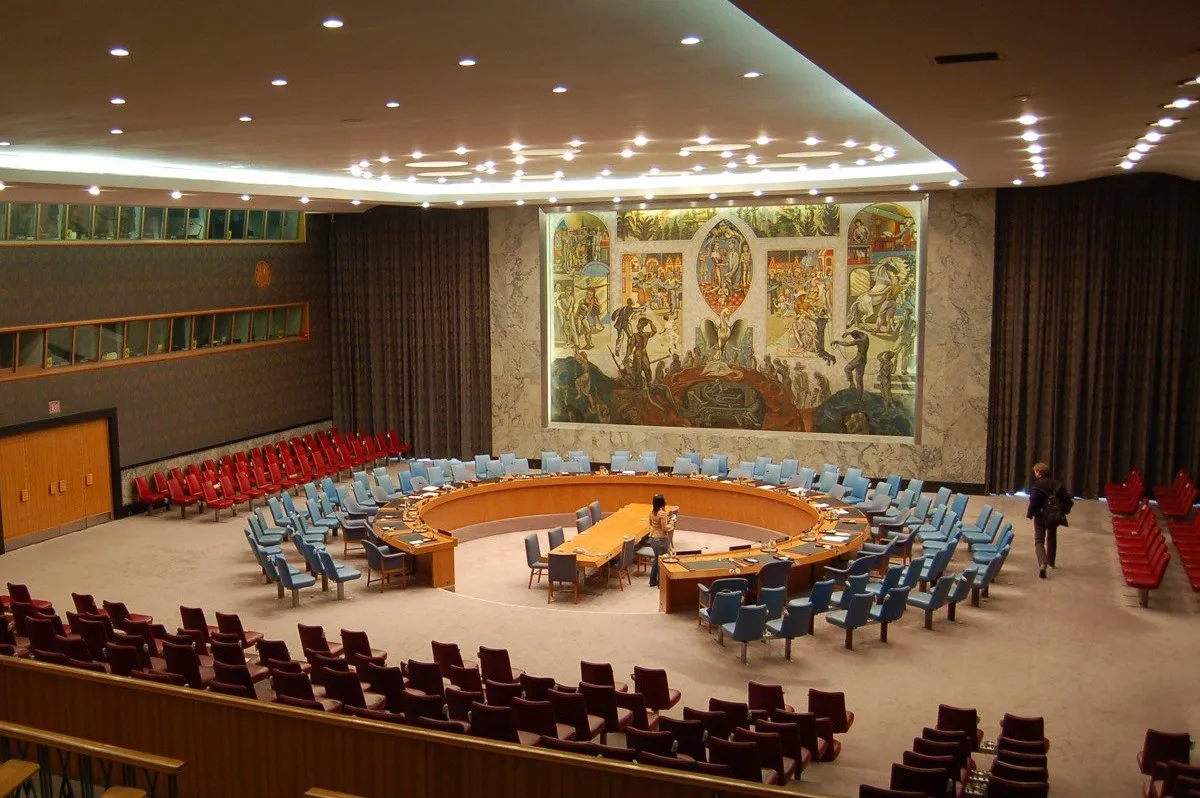
Bahrain, serving as chair of the GCC’s 46th session, has led the diplomatic effort at the UN, with ambassador Jamal Fares Alrowaiei telling the Security Council: “We hold the government of Iran fully responsible for these attacks, and we reject any justifications or explanations to justify this hostile behavior or to manipulate rules of international law”. The UN Charter “does not justify in any way these cowardly attacks,” he added, speaking on behalf of all six GCC members as well as Syria and Jordan.
A Diplomatic Counter-Offensive
Bahrain’s Permanent Mission in New York submitted a letter to UN Secretary-General António Guterres on behalf of the GCC, conveying the bloc’s “strongest condemnation and denunciation of the blatant Iranian attack” and describing it as “a flagrant violation of national sovereignty and a clear breach of the principles of international law and the Charter of the United Nations,” according to the Kuwait News Agency.
The GCC’s position, formalized at the 50th Extraordinary Meeting of its Ministerial Council on March 1, emphasized that member states had repeatedly assured Iran that their territories would not be used to launch attacks against the Islamic Republic — assurances Tehran disregarded as it continued military operations targeting civilian and residential facilities across the region.
Iran’s UN envoy Amir Saeid Iravani had told the Security Council that Tehran was exercising its right to self-defense under Article 51, directing strikes “exclusively at United States bases and assets”. But US Central Command disputed this claim, saying Iran struck 14 civilian locations including airports in Dubai and Kuwait, hotels, the Port of Dubai, and residential areas across Bahrain and Qatar.
Mounting Damage Across the Gulf
As of March 7, the scale of Iranian attacks has been extensive. Bahrain’s Defense Force reported intercepting 86 missiles and 148 drones targeting the kingdom. Qatar faced waves of drone assaults, with its military downing two Iranian Su-24 bombers. Saudi Arabia intercepted ballistic missiles aimed at military and oil infrastructure. The GCC Secretary-General on March 7 condemned an Iranian strike on buildings in Bahrain housing Qatari naval personnel serving under the GCC Unified Military Command, calling it “an unacceptable hostile act”.
The GCC-EU joint ministerial meeting in Brussels on March 5 also condemned the attacks, with ministers discussing damage to oil facilities, service utilities, and residential areas, and affirming the GCC’s right to self-defense. The GCC ministerial statement warned that any further escalation “would undermine regional security and drag the region into dangerous trajectories with catastrophic consequences for international peace and security”.
Photo Credit: Dano (CC BY 2.0)